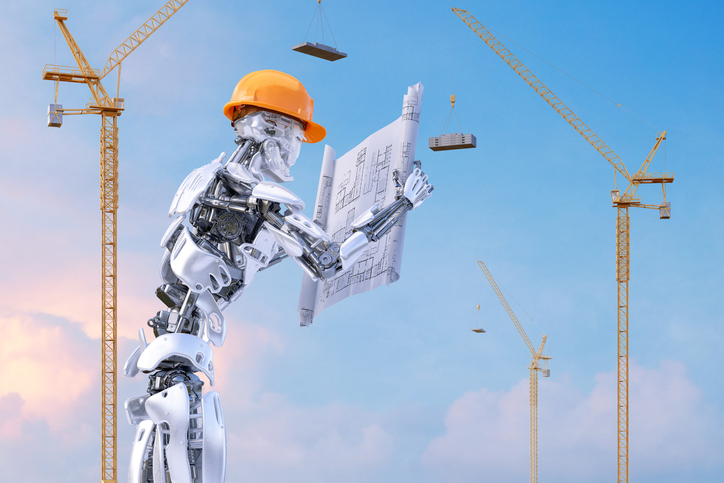
What’s happening: Construction robotics have moved beyond proof-of-concept. Semi-autonomous machines are now handling bricklaying, concrete printing, rebar tying, and drone-based site surveying on California projects — and adoption is accelerating as labor costs stay elevated and skilled worker availability stays tight.
Why It Matters to You
California faces one of the nation’s worst construction labor shortages. Robots fill that gap on repetitive, high-precision tasks — performing them faster and more consistently than manual crews, shortening project timelines and reducing rework.
3D concrete printing is the headline technology. Several California startups are using large-format concrete extrusion systems to build residential structures faster and with significantly less material waste — directly relevant in a state with strong sustainability mandates and a housing crisis.
Autonomous survey drones equipped with multi-sensor scanners are already standard on large commercial sites, mapping in high detail and catching errors early enough to correct without costly rework.
For building safety: robots are absorbing the most hazardous tasks — demolition, high-rise welding, heavy lifting — with early adopters reporting reductions in workplace incidents.
The Labor Question
Unions have raised legitimate concerns about displacement. The more accurate picture: robotics are reallocating workers toward higher-skill roles like programming, operating, and maintaining automated systems. Several California community colleges have launched construction technology programs to build this workforce.
What It Means for Your Next Project
Ask your GC whether they’re using drone surveying and automated layout tools. These aren’t fringe technologies — they’re on active sites statewide and directly affect your project’s cost and schedule performance.
A Builder’s Life | Technology